
The real cost of running 40 tools
A separate phone system, a shared inbox, a chat app, a CRM, a project tracker, timesheets, accounting, e-sign… The subscription bill is the smallest part of what the stack costs you.

The subscription bill is the smallest layer. The expensive part is the re-typing between the tools.
Count your tabs
Most small businesses we talk to don't think they run 40 tools — until they count. Phone system, WhatsApp, shared email, web chat, team chat, CRM, quoting, project tracker, timesheets, procurement, inventory, invoicing, accounting, e-signature, forms, document storage, dashboards, plus a handful of single-purpose apps stitched in with automations.
Each one made sense when it was added. Together they've become the operating model — and the owner has become the integration layer.
The visible cost is the small one
The subscription bill is real but it's the smallest layer. The bigger costs are the seams: the same customer typed into four systems, the quote re-keyed into the invoice, the timesheet re-entered into payroll, the order status that lives in one tool while the customer conversation lives in another.
Every seam is re-typing, delay, and a place where the truth can diverge — which is exactly where the margin leaks we've mapped tend to live.
The silo tax on AI
There's a newer cost too. AI is only as good as the data it can see, and fragmented stacks starve it. A copilot bolted onto one tool can only reason about that tool's slice — it can answer 'what's in this inbox' but not 'should we chase this invoice, given the job, the contract and the conversation'.
One connected record is what makes an AI layer genuinely useful: it can see the lead, the quote, the job, the hours, the invoice and the conversation as one story — and then act on it, with your approval.
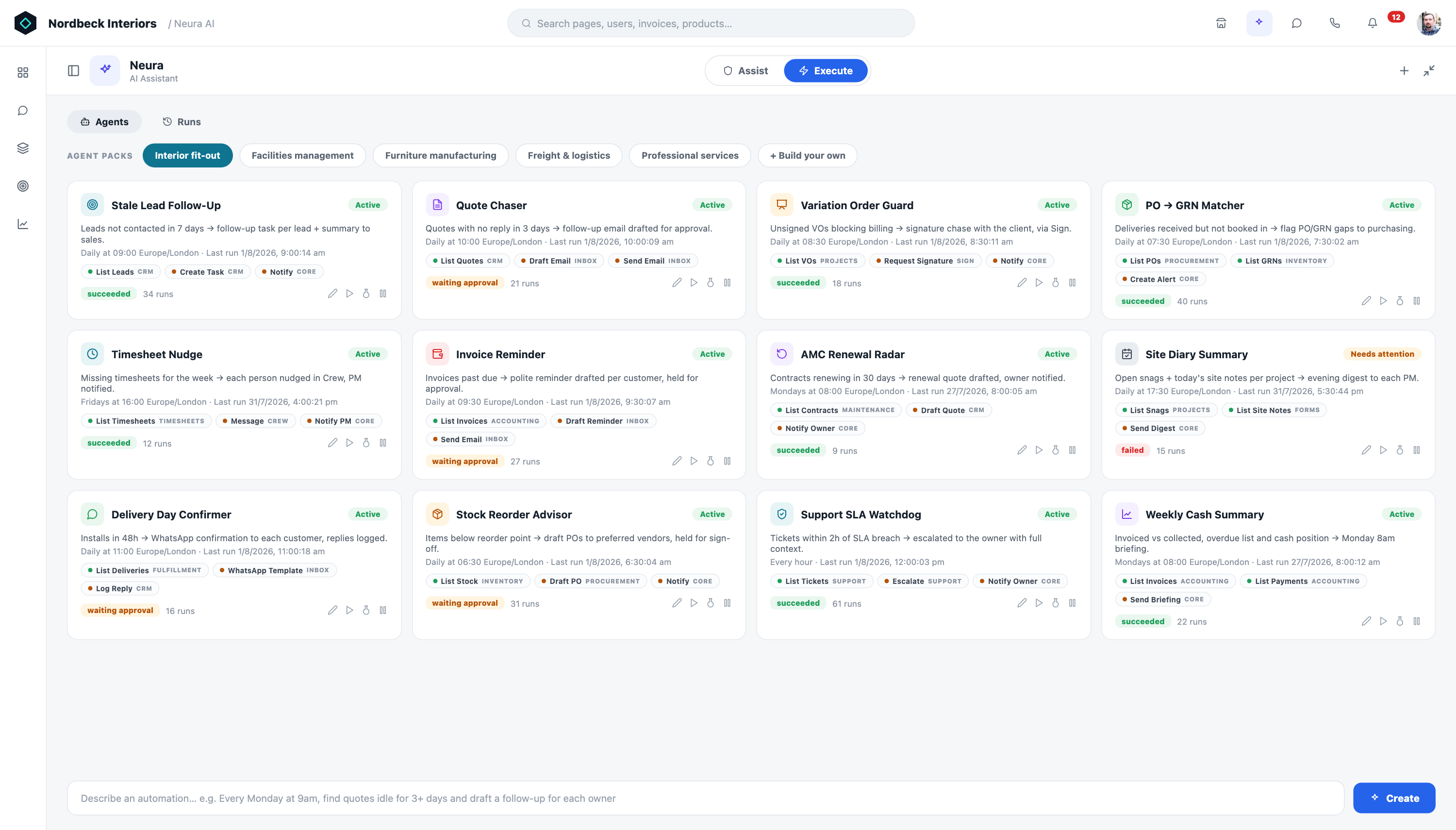
Consolidation without the rip-and-replace
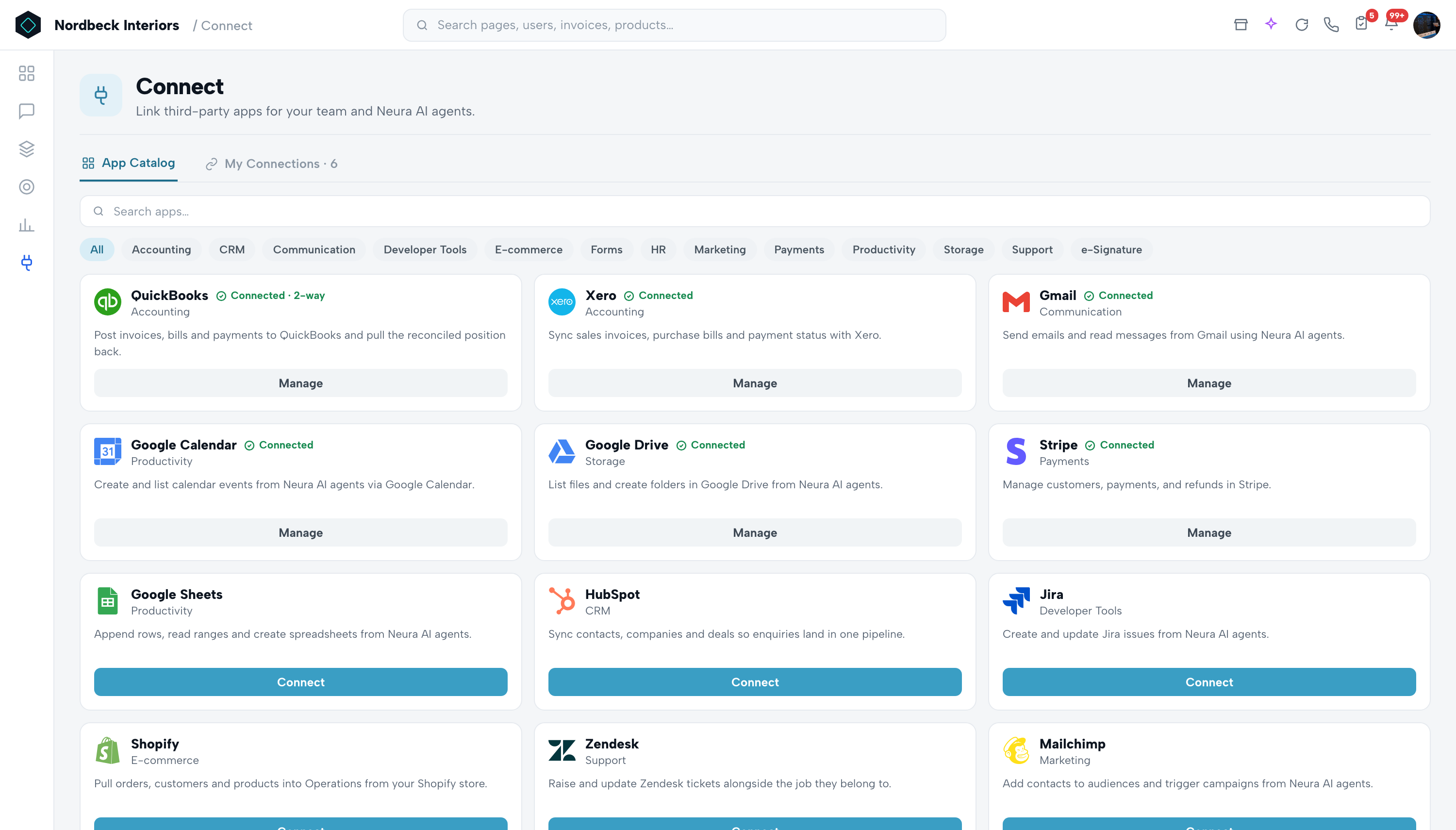
The objection is always the same: 'we can't rip everything out'. You don't have to. The pattern that works is consolidating the core — communications, operations, money — onto one system, and connecting the tools that genuinely earn their place. Keep the accounting you trust; connect it. Keep Slack if your team lives there; connect it.
The goal isn't fewer logos for its own sake. It's one source of truth, so the seams — and the leaks that live in them — disappear.
The takeaway
Do the count. List every tool that touches a customer, a job or an invoice, and mark every place data is re-typed between them. Each mark is a seam, and each seam is costing you time, speed, customer patience or money — the four things that decide whether teams switch.
The Tool-Consolidation Worksheet
Map every tool that touches a customer, job or invoice — and every seam where data is re-typed — to see what your stack really costs you.